


If you’ve been following AI news in 2026, you’ve probably noticed one word popping up everywhere: agents. Companies like Google, OpenAI, and Anthropic keep talking about AI agents as the next big shift in how we use artificial intelligence. But what exactly is an AI agent, and how is it different from the chatbots you already use like ChatGPT or Gemini?
In this guide, we’ll break down AI agents in plain, simple language — no technical jargon, no confusing definitions. By the end, you’ll understand what AI agents are, how they work, real examples you can try today, and why they matter for the future of technology.
What Is an AI Agent?
An AI agent is a computer program powered by artificial intelligence that can perform tasks on its own, with little or no human supervision. Unlike a regular chatbot that only responds when you type a message, an AI agent can plan, make decisions, take actions, and even use other tools or software to complete a goal.
Think of it this way:
A chatbot is like a helpful friend who answers your questions when you ask.
An AI agent is like a personal assistant who you give a task to, and they go off and handle the entire job — checking emails, booking appointments, researching information, and reporting back to you once it’s done.
The key difference is autonomy. AI agents don’t just talk — they act.
AI Agent vs Chatbot vs Traditional AI: What’s the Difference?
It’s easy to confuse these terms, so let’s clear things up with a simple comparison.
Traditional AI (Rule-Based Systems)
These are older AI systems that follow fixed rules. They can only do exactly what they were programmed to do, with no flexibility. Think of a basic customer support bot that only answers pre-written questions.
Chatbots (Like ChatGPT)
Modern chatbots use large language models (LLMs) to understand and respond to natural language. They’re great at answering questions, writing content, and having conversations — but they usually wait for you to prompt them, and they don’t take real-world actions on their own unless specifically connected to tools.
AI Agents
AI agents take things a step further. They can:
Understand a goal you give them (e.g., “Find me the cheapest flight to Dhaka next month”)
Break that goal down into smaller steps
Use tools like web browsers, calendars, or apps to complete those steps
Make decisions along the way based on what they find
Continue working until the task is finished, without needing constant human input
In short, chatbots talk — agents do.

How Do AI Agents Work?
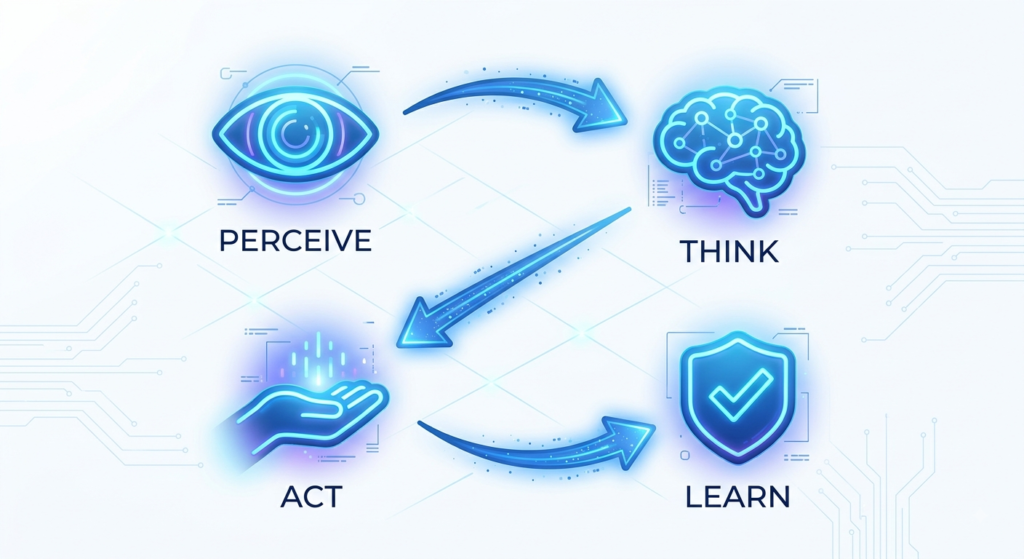
AI agents generally follow a cycle made up of four main stages:
- Perceive
The agent gathers information from its environment. This could mean reading a webpage, checking your calendar, scanning an email inbox, or receiving data from a connected app. - Reason and Plan
Using the information it has, the agent (powered by a large language model) decides what steps are needed to reach the goal. It essentially “thinks” through the problem, similar to how a human would plan out a task. - Act
The agent takes action. This might mean sending an email, filling out a form, clicking buttons in a browser, running code, or calling another software tool through what’s known as an API. - Learn and Adjust
Many advanced agents can evaluate whether their action worked. If something goes wrong, the agent can adjust its plan and try a different approach — much like how a person would course-correct if their first attempt didn’t work.
This loop of perceive → plan → act → adjust can repeat multiple times until the task is fully complete.

Real-World Examples of AI Agents
AI agents are no longer just a research concept — they’re already being used in everyday tools. Here are some practical examples:
- Coding Agents
Tools like Claude Code and GitHub Copilot’s agent mode can write code, fix bugs, run tests, and even manage entire software projects with minimal human guidance. - Browsing Agents
Some AI tools can open a web browser, search for information, click through websites, and gather data — completing research tasks that would normally take a human hours. - Customer Support Agents
Businesses are using AI agents to handle customer inquiries from start to finish — checking order status, processing refunds, and escalating complex issues to humans only when necessary. - Personal Productivity Agents
Newer AI assistants can manage your calendar, draft and send emails, organize files, and complete multi-step office tasks automatically. - Shopping and E-commerce Agents
AI shopping agents can compare prices across websites, find the best deals, and even complete purchases on your behalf based on your preferences.
Types of AI Agents
Not all AI agents work the same way. Here’s a simple breakdown of the main categories:
Simple Reflex Agents
These react directly to what they observe, without thinking about the past or future. They follow “if this happens, do that” logic.
Model-Based Agents
These agents keep an internal understanding of their environment, allowing them to make smarter decisions based on more than just the current moment.
Goal-Based Agents
These agents are given a specific goal and figure out the best sequence of actions to achieve it — this is the type most commonly associated with today’s AI agents.
Learning Agents
These agents improve their performance over time by learning from past experiences and feedback.
Multi-Agent Systems
Sometimes, multiple AI agents work together, each handling a different part of a larger task — similar to how a team of employees might divide responsibilities.
Popular AI Agent Tools in 2026
As of 2026, several AI agent tools have become mainstream. While new tools launch frequently, here are the categories worth knowing:
Coding and development agents — Automate writing, testing, and debugging software
Research and browsing agents — Search the web and compile information automatically
Workflow automation agents — Connect different apps (email, calendars, spreadsheets) and handle repetitive tasks
Customer service agents — Handle support tickets and customer conversations
Personal assistant agents — Manage scheduling, reminders, and daily tasks
Many of these tools now offer free tiers, making it easier than ever for beginners to start experimenting with AI agents without any technical background.
Benefits of AI Agents
Saves Time
Instead of manually completing multi-step tasks, you can delegate them entirely to an agent and focus on more important work.
Reduces Human Error
Agents can follow instructions precisely and consistently, reducing mistakes caused by fatigue or oversight.
Works Around the Clock
Unlike humans, AI agents don’t need breaks or sleep — they can work on tasks 24/7.
Handles Complex, Multi-Step Tasks
Agents can manage tasks that require multiple steps across different tools and platforms, something traditional chatbots struggle with.
Scales Easily
Businesses can deploy multiple agents to handle increasing workloads without hiring more staff.
Risks and Limitations of AI Agents
While AI agents are powerful, it’s important to understand their limitations before relying on them completely.
Mistakes Can Compound
Because agents take multiple actions in sequence, a small error early on can lead to bigger problems later if not caught in time.
Limited Judgment in Unusual Situations
Agents are good at following patterns but can struggle with truly novel or ambiguous situations that require human judgment.
Security and Privacy Concerns
Giving an AI agent access to your email, files, or accounts means trusting it with sensitive information — proper safeguards and permissions are essential.
Still Requires Human Oversight
Most experts recommend starting AI agents with limited, read-only access and human approval steps before giving them full autonomy over important tasks.
How to Get Started with AI Agents as a Beginner
If you’re new to AI agents and want to start experimenting, here’s a simple path forward:
Start with a chatbot you already know (like ChatGPT, Claude, or Gemini) and explore their “agent mode” or tool-use features if available.
Try a simple automation task — like asking an agent to research a topic and summarize its findings.
Use built-in safety settings — many agent tools let you review actions before they’re executed, which is a great way to build trust.
Gradually increase autonomy — once you’re comfortable, allow agents to handle slightly more complex tasks with less supervision.
Keep learning — the AI agent space is evolving fast, so following trusted AI news sources will help you stay updated.
The Future of AI Agents
Experts widely agree that AI agents represent the next major shift in artificial intelligence — moving from “AI that talks” to “AI that works.” In 2026, we’re already seeing agents integrated into everyday products, from coding tools to shopping platforms to customer service systems.
Looking ahead, expect to see:
More AI agents working together as teams to complete larger projects
Better safety and oversight tools to keep agents accountable
Wider adoption in small businesses, not just large tech companies
More affordable and accessible agent tools for everyday users
As AI agents become more capable and trustworthy, they’re likely to become a standard part of how we work, shop, and manage our daily lives — much like how smartphones became essential over the past decade.
Frequently Asked Questions
Are AI agents the same as robots?
No. AI agents are software programs, not physical machines. They exist in your computer or the cloud and interact with digital systems, not the physical world (unless connected to robotics hardware).
Do I need coding skills to use AI agents?
Not necessarily. Many AI agent tools today are designed for non-technical users with simple, chat-based interfaces.
Are AI agents safe to use?
Generally yes, especially when used with proper permissions and oversight. It’s best to start with limited access and gradually trust agents with more responsibility as you become familiar with how they work.
Can AI agents replace human jobs?
AI agents are more likely to handle repetitive, time-consuming tasks, freeing up humans for creative and strategic work — rather than replacing jobs entirely, at least in the near term.
Conclusion
AI agents mark an exciting new chapter in artificial intelligence — one where AI doesn’t just answer questions, but actively helps get things done. Whether you’re a business owner looking to automate repetitive tasks, a content creator wanting to save time on research, or simply someone curious about where AI is headed, understanding AI agents is a valuable first step.
As these tools continue to improve throughout 2026 and beyond, now is a great time to start experimenting and discovering how AI agents can fit into your own workflow.
Have questions about AI agents or want to share your experience using one? Feel free to reach out through our Contact page — we’d love to hear from you.